
Indexed In
- Open J Gate
- Genamics JournalSeek
- Academic Keys
- ResearchBible
- Cosmos IF
- Access to Global Online Research in Agriculture (AGORA)
- Electronic Journals Library
- RefSeek
- Directory of Research Journal Indexing (DRJI)
- Hamdard University
- EBSCO A-Z
- OCLC- WorldCat
- Scholarsteer
- SWB online catalog
- Virtual Library of Biology (vifabio)
- Publons
- Geneva Foundation for Medical Education and Research
- Euro Pub
- Google Scholar
Useful Links
Share This Page
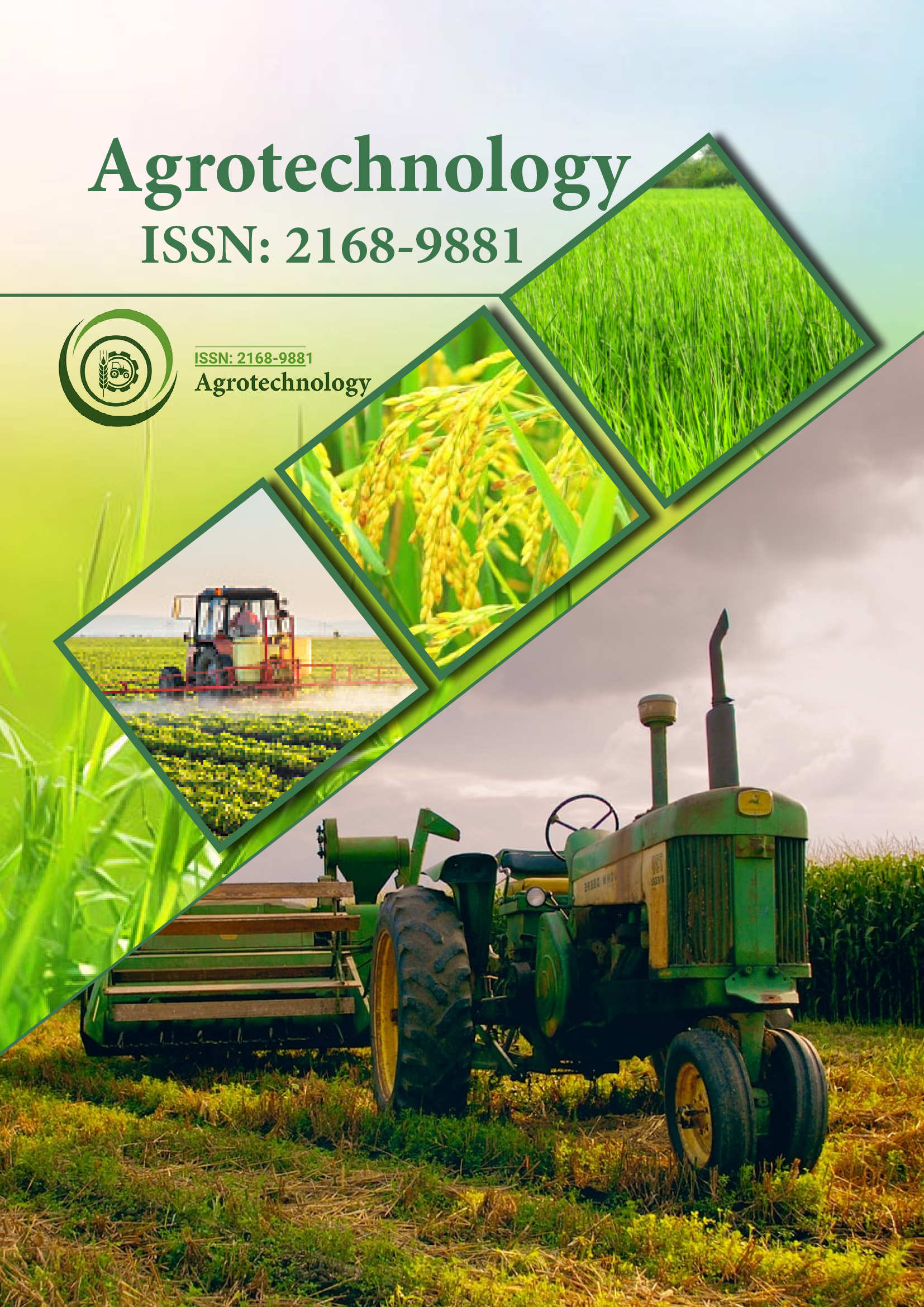
Journal Flyer
Open Access Journals
- Agri and Aquaculture
- Biochemistry
- Bioinformatics & Systems Biology
- Business & Management
- Chemistry
- Clinical Sciences
- Engineering
- Food & Nutrition
- General Science
- Genetics & Molecular Biology
- Immunology & Microbiology
- Medical Sciences
- Neuroscience & Psychology
- Nursing & Health Care
- Pharmaceutical Sciences
Perspective - (2026) Volume 15, Issue 1
Advancing Farm Intelligence Through Internet of Things Technologies and Connected Smart Farming Networks
Dimitrios Yang*Received: 25-Feb-2026, Manuscript No. AGT-26-31955; Editor assigned: 27-Feb-2026, Pre QC No. AGT-26-31955 (PQ); Reviewed: 10-Mar-2026, QC No. AGT-26-31955; Revised: 17-Mar-2026, Manuscript No. AGT-26-31955 (R); Published: 24-Mar-2026, DOI: 10.35248/2168-9881.26.15.410
Abstract
Description
Agriculture is experiencing a significant technological transformation driven by the increasing adoption of digital tools and intelligent monitoring systems. Among the most influential innovations shaping modern farming is the Internet of Things (IoT), a technology that enables physical devices to collect, exchange and analyze data through interconnected networks. In agriculture, IoT technologies are revolutionizing farm management by providing real-time information on crops, soil conditions, weather patterns, livestock health and resource utilization. These capabilities support informed decision-making, improve operational efficiency and contribute to sustainable agricultural development.
The Internet of Things refers to a network of interconnected devices equipped with sensors, communication systems and software that enable data collection and transmission without direct human intervention. In agricultural environments, IoT devices gather information from various sources and transmit it to centralized platforms where data can be analyzed and interpreted. This continuous flow of information allows farmers to monitor field conditions remotely and respond quickly to emerging challenges.
One of the most important applications of IoT in smart farming is soil monitoring. Soil sensors measure parameters such as moisture content, temperature, nutrient levels, salinity and pH. Real-time monitoring enables farmers to understand field variability and implement targeted management practices. Accurate soil information supports efficient irrigation scheduling, fertilizer application and crop planning, resulting in improved productivity and resource conservation.
Water management has become increasingly important due to growing concerns about water scarcity and climate variability. IoT-enabled irrigation systems use sensor data and automated controls to optimize water application. These systems ensure that crops receive the appropriate amount of water while minimizing wastage. Smart irrigation technologies contribute to improved
Now Artificial Intelligence (AI) and Machine Learning (ML)
crop performance and more efficient use of limited water resources.
Weather monitoring represents another important application of IoT technologies in agriculture. Connected weather stations continuously collect information on rainfall, temperature, humidity, wind speed and solar radiation. Farmers can access real-time weather data and forecasts through mobile applications and digital platforms. Accurate weather information supports timely agricultural operations and helps reduce risks associated with adverse climatic conditions.
Crop monitoring systems equipped with IoT sensors provide valuable insights into plant growth and health. Sensors detect environmental conditions that influence crop development and identify potential stress factors such as nutrient deficiencies, pest infestations and disease outbreaks. Early detection enables farmers to take corrective actions before significant yield losses occur.
Livestock management has also benefited significantly from IoT integration. Wearable devices and smart tags monitor animal movement, feeding behavior, body temperature and health indicators. Continuous monitoring improves animal welfare, enhances disease detection and supports more effective livestock management practices. Automated alerts enable farmers to respond quickly to health issues and improve productivity.
The combination of IoT technologies with cloud computing has expanded the capabilities of smart farming systems. Data collected from sensors can be stored, processed and analyzed on cloud-based platforms accessible from anywhere with internet connectivity. Farmers can monitor farm operations remotely and receive automated recommendations based on real-time field conditions.
enhance the value of IoT-generated data. Advanced algorithms analyze large datasets to identify patterns, predict future conditions and optimize farm management decisions. Predictive analytics can support irrigation planning, yield forecasting, pest management and resource allocation, helping farmers improve efficiency and reduce operational risks.
Environmental sustainability is a major benefit associated with IoT-based smart farming. Precise monitoring and targeted resource application reduce water consumption, fertilizer losses and chemical usage. Improved resource efficiency lowers production costs while minimizing environmental impacts on soil, water and ecosystems.
Economic advantages also contribute to the growing adoption of IoT technologies. Improved productivity, reduced resource wastage, lower labor requirements and enhanced operational efficiency increase farm profitability. Farmers gain greater control over production systems and can make more informed decisions based on reliable data.
Despite its potential, IoT adoption in agriculture faces challenges including high implementation costs, connectivity limitations, cybersecurity concerns and technical skill requirements. Expanding digital infrastructure and providing training opportunities will be essential for broader implementation, particularly in rural and developing regions.
Citation: Yang D (2026). Advancing Farm Intelligence Through Internet of Things Technologies and Connected Smart Farming Networks. Agrotechnology.15.410.
Copyright: © 2026 Yang D. This is an open-access article distributed under the terms of the Creative Commons Attribution License, which permits unrestricted use, distribution and reproduction in any medium, provided the original author and source are credited.