
Indexed In
- Open J Gate
- Genamics JournalSeek
- JournalTOCs
- China National Knowledge Infrastructure (CNKI)
- Electronic Journals Library
- RefSeek
- Hamdard University
- EBSCO A-Z
- OCLC- WorldCat
- SWB online catalog
- Virtual Library of Biology (vifabio)
- Publons
- MIAR
- Euro Pub
- Google Scholar
Useful Links
Share This Page
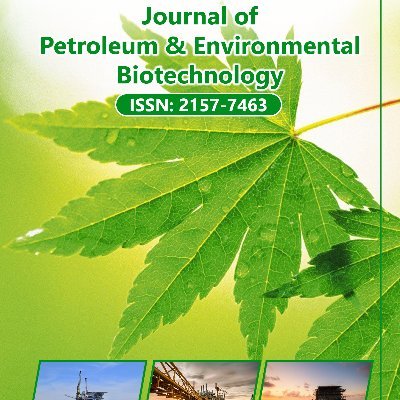
Journal Flyer
Open Access Journals
- Agri and Aquaculture
- Biochemistry
- Bioinformatics & Systems Biology
- Business & Management
- Chemistry
- Clinical Sciences
- Engineering
- Food & Nutrition
- General Science
- Genetics & Molecular Biology
- Immunology & Microbiology
- Medical Sciences
- Neuroscience & Psychology
- Nursing & Health Care
- Pharmaceutical Sciences
Perspective - (2026) Volume 17, Issue 1
Advances in Petroleum Waste Treatment Technologies for Environmental Protection
Evelyn Harrington*Received: 27-Feb-2026, Manuscript No. JPEB-26-31511; Editor assigned: 02-Mar-2026, Pre QC No. JPEB-26-31511 (PQ); Reviewed: 16-Mar-2026, QC No. JPEB-26-31511; Revised: 02-Mar-2026, Manuscript No. JPEB-26-31511(R); Published: 30-Mar-2026, DOI: 10.35248/2157-7463.26.17.638
Description
Petroleum waste generated from extraction, refining, transportation, and storage activities contains complex mixtures of hydrocarbons, heavy metals, Sulphur compounds, and other persistent organic pollutants. Improper handling of these residues can lead to contamination of soil, groundwater, and marine ecosystems. Treatment technologies developed for petroleum waste focus on reducing toxicity, recovering usable materials, and converting harmful compounds into less harmful forms through physical, chemical, and biological processes.
Physical treatment methods are often the first stage in managing petroleum waste. Techniques such as oil-water separation, sedimentation, filtration, and centrifugation are widely used to remove bulk hydrocarbons from wastewater streams. Gravity-based separation systems allow lighter oil fractions to rise to the surface, where they can be collected. Advanced filtration units using activated carbon or membrane systems help in removing smaller hydrocarbon molecules and suspended particles. These methods are effective in reducing the initial pollutant load before further processing.
Thermal treatment approaches are also applied to petroleum waste with high levels of contamination. Incineration is one such method where waste materials are subjected to high temperatures to break down complex hydrocarbons into simpler compounds such as carbon dioxide and water vapour. Pyrolysis is another thermal process that decomposes petroleum waste in the absence of oxygen, producing gaseous fuels, liquid oils, and solid residues. These processes help in energy recovery while reducing waste volume.
Chemical treatment techniques involve the use of reactive agents to transform hazardous compounds into less harmful substances. Oxidation processes using ozone, hydrogen peroxide, or advanced oxidation systems are effective in degrading resistant hydrocarbons. Coagulation and flocculation methods are used to aggregate fine oil droplets and suspended particles, making them easier to remove from wastewater. PH adjustment and chemical neutralization also play a role in stabilizing waste before discharge or further treatment.
Biological treatment methods have gained attention due to their environmentally compatible nature. Microorganisms such as bacteria and fungi are capable of breaking down petroleum hydrocarbons into simpler, non-toxic compounds through metabolic activity. Bioremediation systems can be applied in soil, water, and sludge contaminated with oil residues. Techniques include land farming, composting, and bio pile systems where microbial populations are stimulated under controlled conditions to enhance degradation rates.
Bio surfactant-assisted treatment is another biological approach where naturally produced surface-active compounds increase the availability of hydrocarbons for microbial degradation. These bio surfactants reduce surface tension, allowing oil droplets to disperse more easily in aqueous environments, improving microbial access. This method is particularly useful in marine oil contamination scenarios.
Integrated treatment systems combining physical, chemical, and biological methods are increasingly used for complex petroleum waste streams. Sequential treatment allows initial removal of bulk contaminants, followed by chemical breakdown and final biological polishing. This multi-stage approach improves overall efficiency and reduces environmental impact compared to single-method systems.
Industrial-scale petroleum waste treatment facilities often include oil recovery units that extract usable hydrocarbons from waste streams. Recovered oil can be reprocessed and reused in refining operations, reducing raw material consumption. Sludge treatment units handle semi-solid residues that require stabilization before disposal or reuse in construction materials after proper processing.
Environmental monitoring is an important component of petroleum waste management systems. Regular assessment of soil and water quality ensures that treatment processes are functioning effectively. Analytical techniques such as gas chromatography and mass spectrometry are used to identify residual hydrocarbon compounds and evaluate treatment efficiency.
Emerging developments in petroleum waste treatment include the use of genetically modified microorganisms designed to degrade specific hydrocarbon compounds more efficiently. Nanomaterials are also being explored for their ability to adsorb and break down petroleum pollutants at accelerated rates. However, these technologies are still under evaluation for large-scale application.
Conclusion
Economic considerations play a role in selecting treatment technologies. Cost-effective methods that provide energy recovery or material reuse are often preferred in industrial settings. Regulatory frameworks in many countries require petroleum industries to comply with strict waste discharge standards, encouraging adoption of efficient treatment systems.
Petroleum waste treatment technologies continue to evolve with advancements in environmental engineering and biotechnology. The integration of multiple treatment approaches offers improved efficiency in reducing environmental pollution caused by petroleum-related activities.
Citation: Harrington E (2026). Advances in Petroleum Waste Treatment Technologies for Environmental Protection. J Pet Environ Bio Technol. 17:638.
Copyright: © 2026 Harrington E. This is an open-access article distributed under the terms of the Creative Commons Attribution License, which permits unrestricted use, distribution and reproduction in any medium, provided the original author and source are credited.