
Indexed In
- Academic Journals Database
- Open J Gate
- Genamics JournalSeek
- JournalTOCs
- China National Knowledge Infrastructure (CNKI)
- Scimago
- Ulrich's Periodicals Directory
- RefSeek
- Hamdard University
- EBSCO A-Z
- OCLC- WorldCat
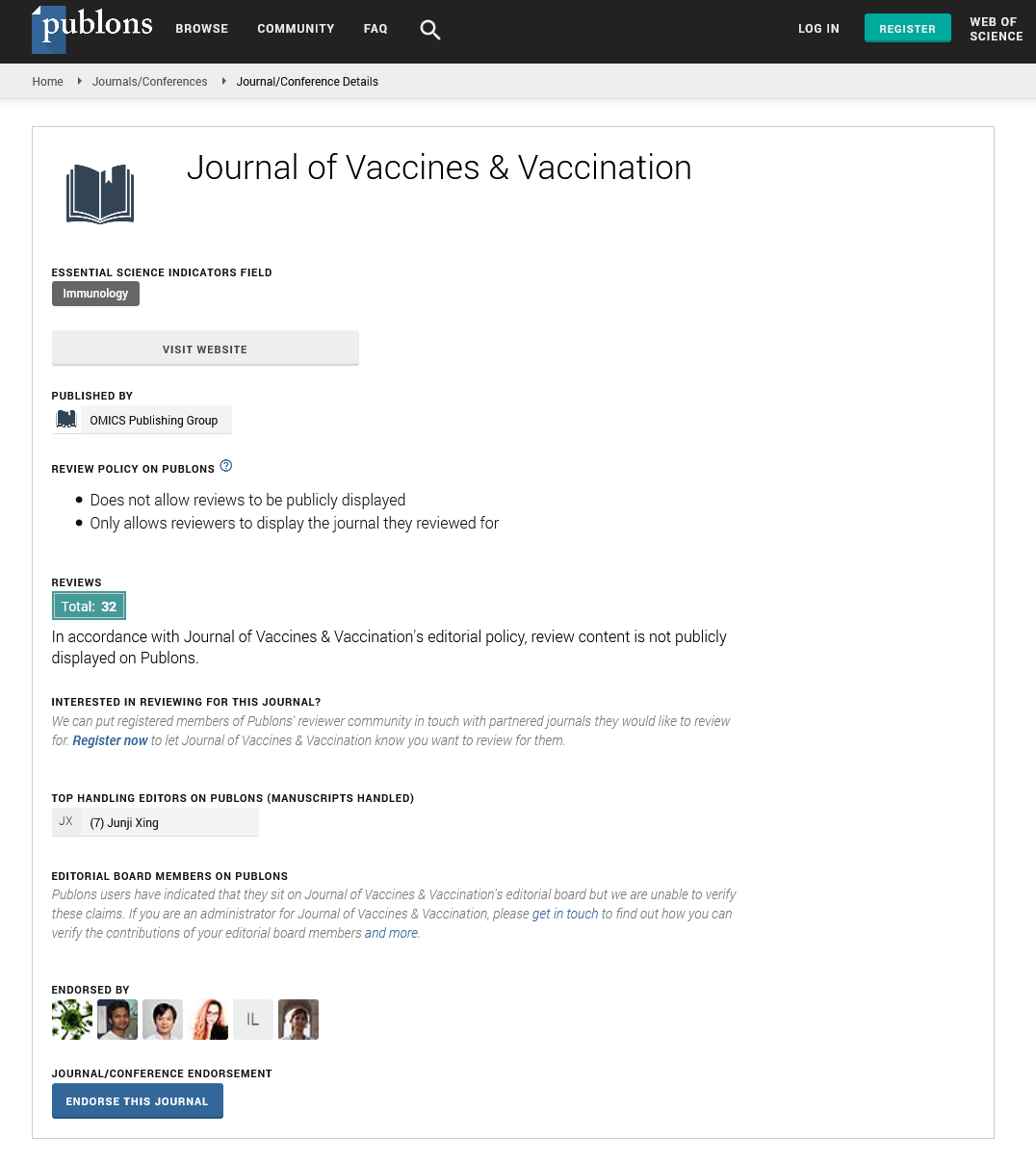
- Publons
- MIAR
- University Grants Commission
- Geneva Foundation for Medical Education and Research
- Euro Pub
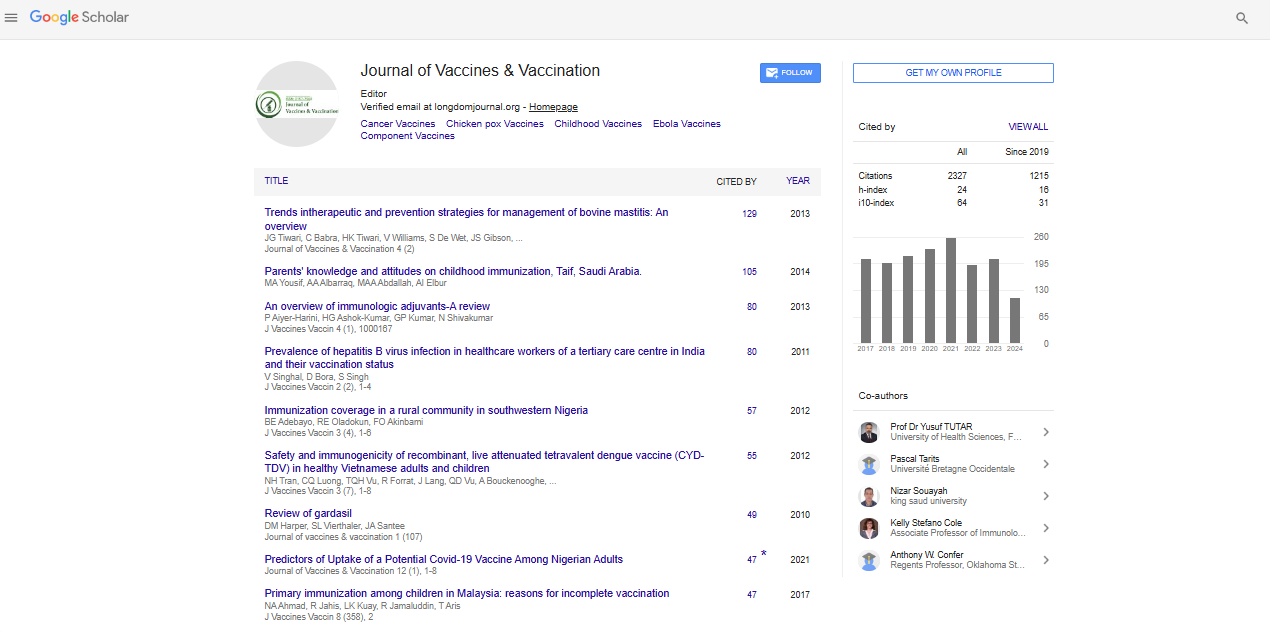
- Google Scholar
Useful Links
Share This Page
Open Access Journals
- Agri and Aquaculture
- Biochemistry
- Bioinformatics & Systems Biology
- Business & Management
- Chemistry
- Clinical Sciences
- Engineering
- Food & Nutrition
- General Science
- Genetics & Molecular Biology
- Immunology & Microbiology
- Medical Sciences
- Neuroscience & Psychology
- Nursing & Health Care
- Pharmaceutical Sciences
Abstract
Strengthening Vaccine Management in a Resource-Limited Setting: A Study of Healthcare Workers' Practices in Wau County, Western Bahr El Ghazal State, South Sudan
Agok Malual Akec Ayul, Shiferaw Mitiku-Tebeka, Mulatedzi Makhado and Marie Jeanne Mukazayire*
Background: Effective Vaccine Management (EVM) is crucial for maintaining vaccine potency and protecting children from preventable diseases. A 2019 assessment using World Health Organization (WHO) criteria identified significant deficiencies in Wau county's vaccine management practices, with a score of only 56% across nine key domains. These domains include vaccine storage temperature, arrival processes, storage capacity, infrastructure, equipment, maintenance, stock management, distribution, and supportive functions.
Objective: This study aims to assess the knowledge levels, practices, and challenges affecting vaccine management among healthcare workers in public health facilities in Wau county, Western Bahr El Ghazal state, South Sudan.
Method: A descriptive cross-sectional research design was employed, collecting data from 27 public health facilities, including primary health care centers, units, hospitals, and cold chain centers. A self-administered questionnaire targeted 52 healthcare workers involved in vaccine management. Descriptive statistics, including mean, standard deviation, frequency, and percentages, were used for data analysis.
Results: The study revealed knowledge and practice gaps related to EVM. While 69% of respondents had some knowledge of Vaccine Vial Monitors (VVMs), this was below the WHO benchmark of 80%. Notably, 44% were unaware of vaccine stock availability, and 48% lacked knowledge of temperature recording. Only 42% adhered to the recommended EVM practices from WHO and the Ministry of Health. Key challenges identified included cold chain equipment (mean: 3.8), lack of training and supervision (mean: 3.78), insufficient management support (mean: 3.63), and logistical issues (mean: 3.58). Policy-related challenges were perceived as less influential (mean: 2.76).
Conclusion: The study highlights significant shortcomings in EVM practices among healthcare workers in Wau county, particularly in areas such as vaccine stock awareness and temperature recording. Adherence to WHO recommendations is below target levels, and critical challenges persist, including inadequate cold chain equipment, limited training, and logistical issues. Addressing these gaps through targeted training, supportive supervision, improved resource allocation, and policy revisions is essential for strengthening EVM practices and ensuring optimal vaccine effectiveness.
Recommendations: To enhance EVM practices in Wau county, a multi-faceted approach is essential. Policymakers should prioritize investments in cold chain equipment and training programs that align with WHO best practices.
Published Date: 2026-01-19; Received Date: 2024-11-15